In this post we will look into Dynamic Application security testing.
What is Dast?
It is a process of testing a running instance of a web application for weaknesses and vulnerabilities. It focuses on blackbox testing approach where vulnerabilities are found just like a regular attacker would find them. Simply put, DAST identifies vulnerabilities by trying to exploit them, either manually or through automated tools.
By testing the application from an outside perspective, we can abstract ourselves from its inner workings and focus on identifying vulnerabilities that an attacker would likely find. This means the results obtained from DAST will often point to vulnerabilities requiring prioritized attention as they are expected to be found without prior knowledge of the application.
It is important to note that DAST doesn't replace other methods to find vulnerabilities in applications, but rather complements them.
A secure development lifecycle will often mix several techniques in order to provide a good enough vulnerability coverage.
Manual vs Automated DAST
There are two ways in which DAST can be performed:
- Manual DAST: A security engineer will manually perform tests against an application to check for vulnerabilities.
- Automatic DAST: An automated tool will scan the web application for vulnerabilities.
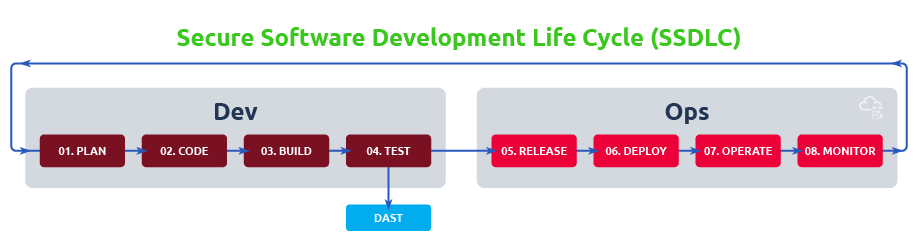
DAST in the SDLC
DAST Pros and Cons
As with any other process used to find vulnerabilities in an application, DAST will have its advantages and disadvantages:
Pros:
| Cons:
|
Comments
Post a Comment